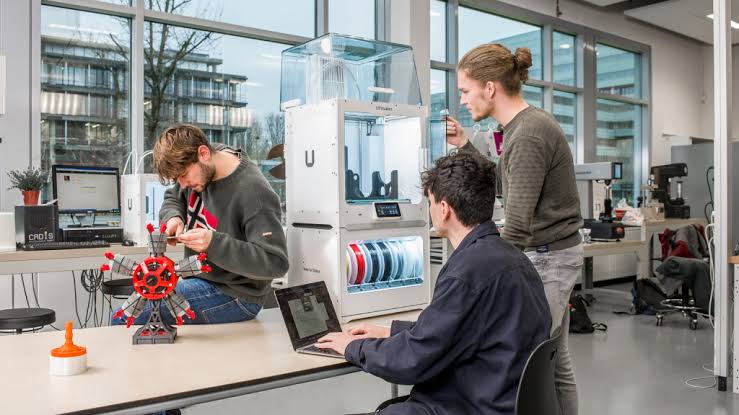
Manufacturing has traditionally relied on processes such as machining, molding, casting, and assembly. While these methods remain essential, additive manufacturing has introduced another way to create physical products. Through 3D printing, digital designs can be transformed into objects by building material layer by layer.
This technology is influencing industries ranging from engineering and education to architecture, healthcare research, and product development. As equipment and materials continue to improve, 3d yazıcılar are becoming useful tools for both specialized applications and everyday production activities.
What Makes 3D Printing Different?
Traditional manufacturing often requires cutting material, creating molds, or assembling several components. Additive manufacturing takes a different approach by constructing an object from a digital model.
The process begins with a three-dimensional design. Slicing software divides the model into layers and generates instructions for the printer.
The machine then creates the object using an appropriate material and printing technology.
This process can make it easier to produce complex geometries, customized components, and prototypes without requiring conventional manufacturing tooling.
However, 3D printing is not automatically the best option for every product. Production volume, material properties, finishing requirements, and manufacturing costs should all be considered.
Applications in Product Development
Product designers and engineers use 3D printing to create prototypes during the development process.
A prototype allows teams to evaluate dimensions, appearance, assembly, and basic functionality before committing to larger production runs.
Designers can make adjustments to a digital model and produce another version without necessarily creating a new mold.
This can support faster design experimentation and improve communication between engineering, design, and production teams.
Depending on the technology and material, prototypes can range from simple visual models to functional components.
Engineering and Manufacturing
Engineering organizations use additive manufacturing for specialized components, fixtures, tooling, and prototypes.
Some applications involve complex shapes that are difficult or expensive to produce using traditional methods. Additive manufacturing may also help consolidate multiple components into a single part.
FDM systems are commonly used for basic models and tooling, while professional technologies such as SLS can support more demanding applications.
Material selection remains important. Engineers must evaluate strength, temperature resistance, dimensional stability, and other relevant properties before using a printed part in an operational environment.
Education and Learning
Educational institutions use 3D printers to help students understand design, geometry, engineering, and manufacturing concepts.
Students can create physical models of mathematical shapes, architectural structures, mechanical assemblies, and scientific concepts.
This approach connects digital design with practical experimentation. Learners can observe how changes in a digital model influence the final physical object.
Educational projects can also introduce students to computer-aided design, problem-solving, iterative development, and responsible technology use.
Architecture and Construction
Architects can use 3D printing to create physical models of buildings, interiors, and urban environments.
These models help communicate design concepts and provide a tangible representation of a proposed structure.
Construction-related additive manufacturing is also being explored for specialized applications, including automated deposition of building materials.
However, construction-scale printing requires specialized equipment, engineering analysis, suitable materials, and compliance with relevant building standards.
Healthcare Research and Medical Applications
Healthcare and medical research are exploring different uses of additive manufacturing.
3D printing can support the production of anatomical models, educational materials, research prototypes, and certain customized devices.
Physical models can help professionals examine complex structures and explain information in a more visual way.
Applications involving medical devices require appropriate design validation, material evaluation, regulatory compliance, and professional oversight. A printed model should not automatically be considered suitable for medical use.
Customization and Personalized Products
One of the distinctive advantages of additive manufacturing is the ability to customize digital designs.
Businesses may use this capability to produce personalized accessories, product prototypes, specialized fixtures, and small batches of customized items.
Because designs can be modified digitally, changing dimensions or appearance may be easier than adjusting traditional manufacturing tooling.
This flexibility can be useful when customers need products with different sizes, shapes, or functional requirements.
Choosing the Right 3D Printer for Industrial Use
Selecting equipment for professional applications requires careful evaluation.
FDM machines can support general prototyping and selected functional components. Resin-based technologies are useful for detailed models, while powder-based systems can support more specialized manufacturing requirements.
Businesses should evaluate:
- Required production volume
- Material performance
- Dimensional accuracy
- Build volume
- Printing speed
- Post-processing requirements
- Maintenance and operating costs
3-dimensional printers should be selected according to the actual manufacturing process rather than general popularity.
Understanding the Cost of Adoption
The cost of adopting 3D printing includes more than purchasing equipment.
Organizations may need design software, materials, trained operators, workspace preparation, maintenance supplies, and post-processing equipment.
Comparing 3D printer prices is important, but businesses should also calculate the cost per finished part.
For some projects, additive manufacturing can reduce tooling requirements or support low-volume production. For others, conventional manufacturing may remain more economical.
A small pilot project can help organizations evaluate practical benefits before making a larger investment.
Challenges and Limitations
3D printing has several limitations. Production speed may be slower than traditional manufacturing for large quantities. Some materials require specialized handling, while printed parts may need sanding, curing, or other finishing processes.
Dimensional accuracy and surface quality can also vary depending on the printer, material, design, and settings.
Understanding these limitations helps organizations choose suitable applications and avoid unrealistic expectations.
Conclusion
3D printing is expanding the possibilities of product development, education, engineering, and specialized manufacturing. Its ability to create customized objects and complex designs makes it a valuable addition to modern production methods.
By understanding the different technologies, materials, and costs, businesses can determine where 3D printing offers practical value. The continued development of 3-dimensional printers will create further opportunities for innovation while maintaining the importance of careful engineering and quality control.